

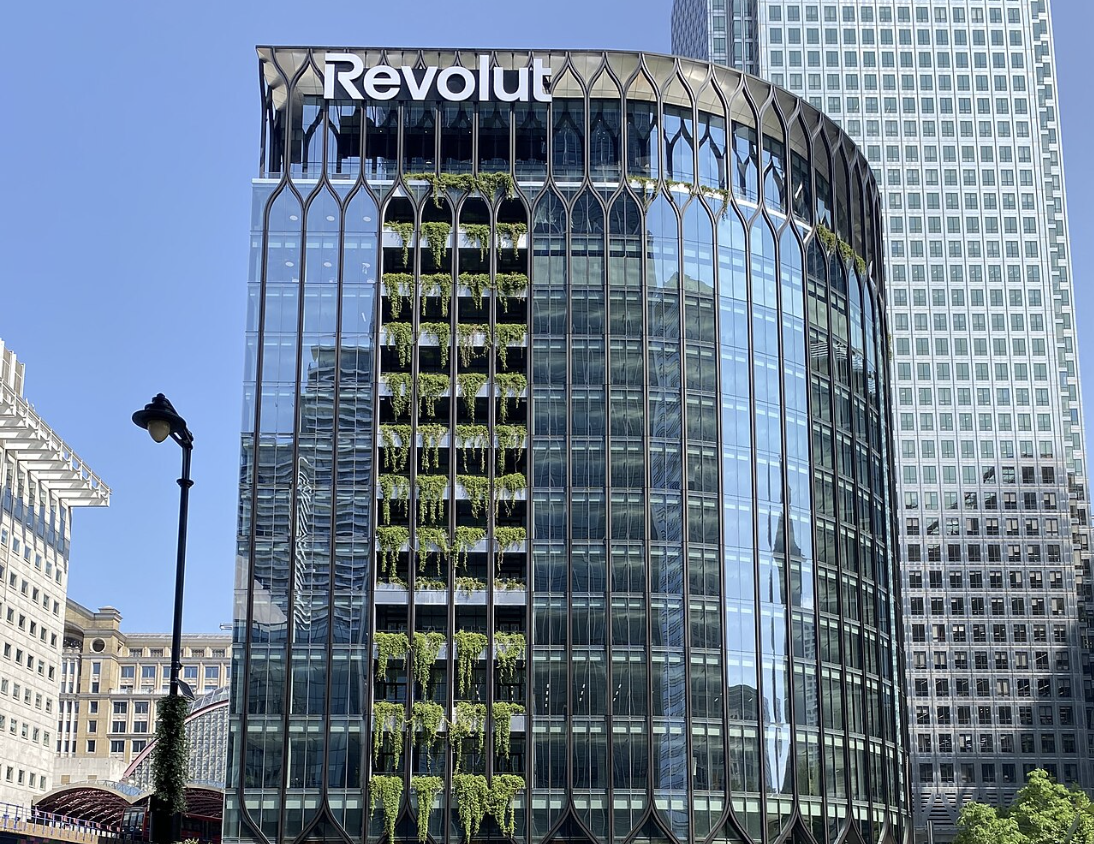
Revolut’s $115 billion secondary share sale, first reported by Bloomberg on June 5, 2026, is the most significant valuation event in European fintech history. Revolut is looking to run a secondary share sale that would value the company at $115 billion, on the heels of receiving a UK bank licence and applying for a charter in the US. A formal process could kick off as soon as this month, allowing early investors and employees to sell shares and generate liquidity. If the Revolut $115 billion secondary share sale closes at the targeted figure, it would represent a 53 percent jump from the $75 billion valuation Revolut achieved in its November 2025 secondary, with each share priced at roughly $2,118. It would make Revolut worth more than Barclays, more than Deutsche Bank, and roughly on par with BNP Paribas. It would make it the most valuable private fintech company in the world. And it would confirm what Revolut’s trajectory has been signalling for the better part of two years: this is no longer a neobank. It is a global financial institution at an unusual moment in its capital markets journey, one in which the question is not whether the valuation is justified but whether the mechanisms being used to establish it are the right ones for the company and its investors.
Revolut’s $115 Billion Secondary Share Sale: Key Numbers
Target valuation: $115 billion (Bloomberg, June 5, 2026)
Previous valuation: $75 billion (November 2025 secondary share sale)
Valuation step-up: 53% in approximately seven months
Share price at $115B: approximately $2,118 per share
Secondary sale target size: $750 million to $2 billion (investor demand reportedly exceeds target)
2025 revenue: $6.0 billion (up 46% year-on-year from $4.1 billion in 2024)
2025 pre-tax profit: $2.3 billion (up 57% year-on-year)
Price-to-earnings multiple at $115B: approximately 50x 2025 pre-tax profit
Global customers: 65 million+ as of early 2026
UK banking licence: secured March 11, 2026 from Prudential Regulation Authority
US national bank charter: application filed with OCC (pending)
CEO Nik Storonsky stake at $115B: at least $36 billion (internal share distribution documents)
Previous secondary investors: Coatue Management, Andreessen Horowitz, NVIDIA Ventures
Chairman Martin Gilbert: sounding out investors at Monaco Grand Prix, June 2026
Why the Revolut’s $115 Billion Secondary Share Sale Is Justified by the Numbers
The financial performance that underpins Revolut’s $115 billion secondary share sale target is, by any reasonable measure, exceptional. Revolut reported $6.0 billion in revenue for 2025, up 46 percent year-on-year from $4.1 billion in 2024, and $2.3 billion in pre-tax profit, up 57 percent. A $115 billion valuation on $6 billion of revenue and $2.3 billion of profit implies a price-to-earnings multiple that puts Revolut in the company of the fastest-growing technology businesses in the world. For context, Visa trades at approximately 30 to 35 times earnings. PayPal at approximately 15 times. The 50x multiple implied by the $115 billion target reflects not Revolut’s current earnings but the trajectory those earnings suggest over the next five to ten years: a global financial platform that has grown revenue at roughly 50 percent annually for three consecutive years and is still accelerating into new markets, new product categories, and new regulatory frameworks. The market is paying for what Revolut is becoming, not merely for what it is today. Whether that premium is warranted depends entirely on execution in a small number of high-stakes areas over the next 24 months.
The US Bank Charter: The Biggest Variable Behind the Revolut’s $115 Billion Secondary Share Sale
The most consequential of those areas is the United States. Revolut filed for a US national bank charter with the Office of the Comptroller of the Currency earlier in 2026, a move that, if successful, would give the company direct access to the American consumer banking market of 335 million people and the business banking market that companies like Ramp and Mercury, as we documented in our analysis of the future of business banking, have been rapidly capturing. The OCC charter application is the single most important strategic move in Revolut’s recent history, not because it guarantees American success but because without it, the US market remains closed to Revolut as a licensed bank. Revolut’s customer base has swelled to more than 65 million users as of early 2026. The US banking charter application would open the door to one of the world’s largest consumer banking markets. The OCC review process is lengthy and demanding, and its outcome will do more to justify or undermine the Revolut $115 billion secondary share sale valuation than any revenue figure. The charter that Anchorage Digital sought and obtained required years of compliance infrastructure development before the OCC was satisfied. Revolut will face the same scrutiny. But the filing itself, combined with the UK banking licence secured in March 2026 after a four-year process, signals that Revolut has concluded it needs regulatory standing rather than partnership arrangements as the foundation for its most important markets.
How the Revolut’s $115 Billion Secondary Share Sale Works as a Price Discovery Mechanism
The secondary share sale mechanism Revolut has been using to establish its valuation deserves analytical attention because it is a different kind of price discovery from the processes that determine valuations in the public market. A secondary sale allows existing shareholders, founders, employees, and early investors to sell a portion of their holdings to new investors at a negotiated price. The company does not receive the proceeds directly. What the company receives is a market-clearing price that functions as a reference point for future fundraising, including the eventual IPO. Revolut has been explicit that secondary sales are a staging mechanism. Each one serves two purposes: liquidity for insiders and a price discovery exercise that tells the company what the market will bear before it has to stand before public shareholders and defend the number. The $115 billion target is therefore best understood not as a valuation claim but as a question: is there sufficient institutional appetite, at this price, to establish this as the market-clearing valuation? Early reports suggest the answer is yes: investor demand for the Revolut $115 billion secondary sale reportedly exceeds the initial $750 million target.
Revolut’s $115 Billion Secondary Share Sale: The Wealth Management Dimension
The wealth management dimension of this story intersects directly with our recent coverage of Revolut’s FCA approval for portfolio management and private banking services. The FCA Variation of Permissions granted to Revolut Trading Ltd in May 2026, covering managing investments and dealing as principal, and the planned private banking service for customers with at least £500,000 to deposit, are directly relevant to the $115 billion valuation argument. A company that holds a full UK banking licence, a suite of FCA investment management permissions, a US bank charter application, 65 million customers globally, $2.3 billion in pre-tax profit, and revenues growing at 46 percent annually is making a credible case for the Revolut $115 billion secondary share sale valuation premium over traditional banks. Barclays, with its retail and investment banking operations, its insurance business, and its global markets division, trades at a market capitalisation of approximately £35 billion. Revolut, at $115 billion, would be valued at more than double that. The multiple reflects both Revolut’s growth rate and the market’s assessment that a digital-first universal financial platform carries a structurally different and more valuable economic model than a traditional bank encumbered by physical infrastructure and legacy technology.
The Risks Sitting Beneath the Revolut $115 Billion Secondary Share Sale Headline
The complications that sit beneath the headline valuation are real and should not be dismissed by enthusiasm for the growth trajectory. Beneath the centicorn milestone sits a messier picture involving a co-founder’s sudden departure, a high-stakes US bank charter application, and the uncomfortable reality that the last European fintech IPO of this magnitude ended in a bloodbath. The co-founder departure referred to is that of Vlad Yatsenko, who co-founded Revolut alongside Storonsky and built its initial technology infrastructure, and whose exit adds governance uncertainty to the Revolut’s $115 billion secondary share sale story. His exit, while not publicly explained in detail, removes a key technical founder from the governance structure at a moment when Revolut is executing the most complex regulatory and product expansion in its history. The US charter application carries meaningful uncertainty: the OCC has a history of extending review timelines for complex applications, and any material compliance concern identified during the review could delay or derail the process. And the IPO reference is to Klarna’s NYSE debut, which despite a strong initial reception, underscores the gap between private market valuation enthusiasm and the disciplined scrutiny of public market investors who compare companies on cash flows, capital allocation, and return on equity rather than growth multiples alone.
What the Revolut $115 Billion Secondary Share Sale Means for London and UK Fintech
The UK context for the Revolut’s $115 billion secondary share sale is one of its most interesting dimensions. Revolut is a British company, founded in London in 2015, holding a UK banking licence, and subject to PRA and FCA supervision. Its $115 billion valuation would make it by far the most valuable UK-headquartered financial institution in the world, significantly larger than any company in the FTSE 100’s financial sector. And yet, as we have documented extensively in this publication, from our analysis of Wise’s move to Nasdaq to our coverage of the UK political crisis and its impact on fintech, the company has been unambiguous that when it comes to public markets, London is not the preferred venue. CEO Nik Storonsky has repeatedly confirmed that a US listing, not a London one, is the IPO destination. The Revolut $115 billion secondary sale is effectively a price-setting exercise for that US IPO, using private market transactions to establish the valuation floor before the eventual public offering. The UK produces the company, the UK regulators licence it, the UK customers generate a significant share of its revenue, and the US capital markets get the IPO. That dynamic, repeated across Wise, Revolut, and a growing number of other UK fintechs, is the structural problem that no single government initiative has yet resolved.
Revolut $115 Billion Secondary Share Sale: What It Means for the Future of Fintech
What the Revolut $115 billion valuation means for fintech broadly is a recalibration of what is possible for a company built on a mobile app and a better exchange rate. In 2015, Revolut was a prepaid travel card. In 2026, it is a global financial platform with 65 million customers, $2.3 billion in annual profit, UK banking and FCA investment management permissions, a US bank charter application, wealth management products targeting the mass-affluent segment, and a valuation that exceeds most of the world’s established financial institutions. The speed of that transformation is the most important fact in the story. Not the $115 billion number itself, which the Revolut $115 billion secondary share sale is in the process of confirming or revising, but the eleven-year trajectory it represents. For every fintech founder currently building a company in a coworking space with a Monzo account and a Stripe integration, Revolut’s valuation is the clearest possible statement about what that trajectory can produce. The opportunity is real. The execution is everything.
Fintechbits is a specialist publication covering financial technology, digital payments, and the regulatory and investment landscape across global markets. All analysis represents the editorial views of Fintechbits. This article was published on June 9, 2026. The secondary share sale process had not formally commenced as of publication date. Nothing in this article constitutes investment advice. Revolut is a private company and its financial data is drawn from reported sources.
