

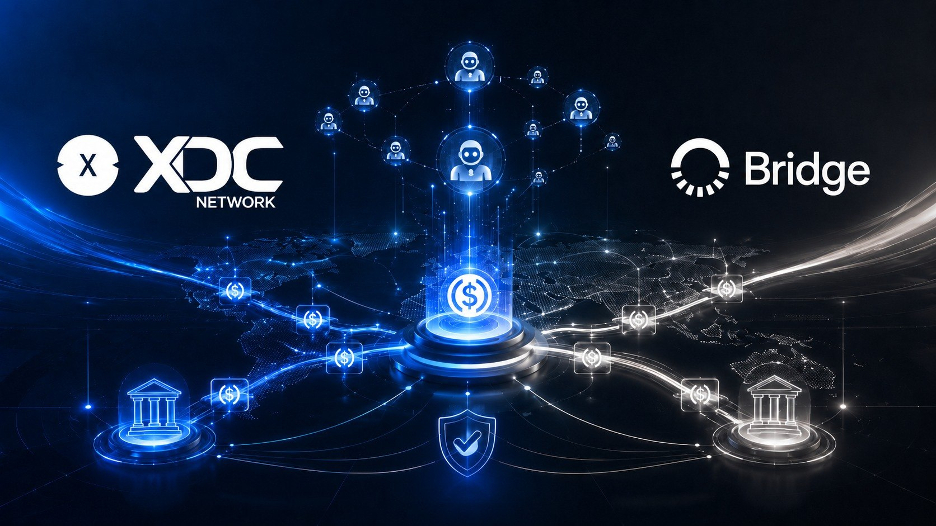
The XDC Tech integration with Bridge gives developers direct access to stablecoin payment infrastructure. Businesses can accept dollars or euros through virtual accounts, convert funds into stablecoins, and settle on XDC in close to real time.
Bridge also handles key parts of the compliance layer. Therefore, developers do not need to build separate systems for customer checks, business verification, sanctions screening, custody and fiat conversion.
XDC Tech Integration Starts With Ordinary Payments
The near-term case is straightforward. A company can receive fiat through Bridge, move value into stablecoins and settle payments on XDC without waiting several days for a cross-border wire.
XDC says its network reaches finality in about two seconds and charges less than one-hundredth of a cent per transaction. Meanwhile, its ISO 20022 alignment helps payment messages connect with systems used by SWIFT, SEPA and FedNow.
Those features give the XDC Tech integration a use case even if autonomous commerce develops slowly. Cross-border businesses already face high fees, delayed settlement and fragmented currency accounts.
Bridge brings virtual accounts, fiat ramps and multi-currency custody into one stack. As a result, XDC gains access to regulated payment infrastructure without building country-by-country relationships from scratch.
FF News covered the XDC and Bridge launch, while FintechBits has tracked the wider shift in stablecoin payments. The practical question is whether developers turn that infrastructure into regular business payment volume.
AI Agents Are the Longer-Term Bet
XDC Tech wants the network to support AI agents that can hold balances and make payments under defined rules. In that model, an agent could receive its own virtual IBAN or ACH-style account through Bridge.
The agent could then hold currencies, convert funds and pay another service without a person approving every small transaction. However, the technology alone does not settle questions about authority, liability or fraud.
An autonomous payment still needs spending limits, approved counterparties, audit records and a clear owner. Therefore, the XDC Tech integration must support controlled automation rather than unrestricted machine spending.
The compliance issue is already drawing attention. FintechBits recently examined Circle and Elliptic’s work on compliance for AI agents. That effort shows why identity and monitoring may matter as much as settlement speed.
The agentic commerce market also remains early. Visa, Mastercard, Stripe and software companies have announced tools or standards, but meaningful payment volume remains hard to measure.
Consequently, XDC may wait years for autonomous transactions to become a large market. The partnership still has value during that wait because ordinary stablecoin settlement does not depend on AI adoption.
Bridge Reduces One Barrier but Not Every Barrier
Bridge gives XDC a faster route into fiat payments and regulated onboarding. Stripe acquired the company in 2025 and now uses its infrastructure across stablecoin products.
That footprint helps developers reach users in several regions. However, the XDC Tech integration does not remove every regulatory or commercial requirement.
Businesses still need clear terms for refunds, disputes, transaction errors and account ownership. They also need to know which entity carries responsibility when an AI agent sends the wrong amount.
Network competition creates another challenge. Several blockchains offer low fees, rapid settlement, stablecoin support and developer tools. Therefore, XDC must win applications and payment volume, not just integrations.
TheStreet also reported on the Bridge connection, focusing on direct access to fiat conversion, virtual accounts and custody tools.
FintechBits has covered the same infrastructure race through Modern Treasury’s stablecoin work with Depa Finance. That deal shows how payment providers increasingly combine stablecoin rails with familiar treasury and reconciliation tools.
The XDC Tech integration will stand out only if developers find the experience easier, cheaper or more reliable than alternatives. Sandbox access helps, but production usage provides the stronger test.
Payment Volume Matters More Than the AI Story
XDC has published documentation and sandbox access for developers. That is enough to begin testing fiat accounts, stablecoin conversion, custody and settlement flows.
The next measure is whether businesses launch products and move real money. In addition, repeat transactions will matter more than one-time demonstrations.
The XDC Tech integration could support exporters, importers, marketplaces and treasury teams before autonomous agents become common. Those users already need faster cross-border settlement and clearer links between fiat and stablecoins.
Agent payments may eventually add another source of demand. Still, XDC should not need that market to justify the Bridge connection.
For now, XDC Tech has secured a regulated infrastructure partner and a practical payments route. The larger claim about agents paying each other remains unproven.
The XDC Tech integration becomes meaningful when payment activity appears outside the sandbox. Whether that volume comes from people, businesses or software agents matters less than whether users keep returning.
