

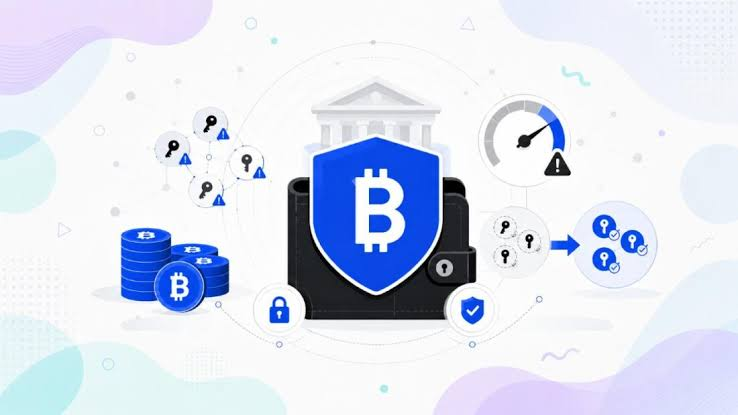
BitGo quantum risk tooling is now live for institutional Bitcoin wallets. BitGo has rolled out new quantum-risk management capabilities, aimed at helping custody clients assess and reduce exposure tied to UTXO-based wallet structures before quantum computing becomes a practical threat rather than a theoretical one.
The release adds four concrete pieces. A UTXO Selection Method groups and prioritises unspent transaction outputs by address to limit exposure from partial spends. A Quantum Risk Score gives clients an in-platform read on their exposure across supported wallets. A Fix Exposed Addresses workflow walks clients through moving funds off elevated-risk addresses. And updated default address-type controls steer new wallets away from riskier transaction patterns.
What the BitGo Quantum Risk Tools Address
The concern behind the BitGo quantum risk tools is narrow but real. Bitcoin addresses whose public keys have already been exposed on-chain, which happens any time a UTXO from that address has been spent, are theoretically more vulnerable to a future quantum computer capable of breaking elliptic curve cryptography. By one estimate, roughly 6.9 million Bitcoin sit in addresses with exposed public keys.
Practical quantum attacks against Bitcoin do not exist today and are not expected imminently. But institutional custodians are starting to treat the not-yet as a planning horizon rather than a reason to ignore the problem, much as enterprises began migrating to post-quantum encryption standards years before a cryptographically relevant quantum computer was expected. CEO Mike Belshe called it investing in “the foundation required for a post-quantum future,” which is accurate for once. This is infrastructure work, not a product with an obvious near-term revenue line.
The BitGo Quantum Risk Move Is Engineering, Not a Scare Tactic
This follows BitGo’s post-quantum multi-party computation simulation work with Silence Laboratories in May, so the company has been building toward this rather than reacting to a sudden news cycle. That matters for credibility.
Quantum risk in crypto custody has had a boy-who-cried-wolf problem, with vendors occasionally using it as a scare tactic to sell unrelated security products. BitGo shipping actual UTXO management tools rather than a whitepaper points to genuine risk engineering. The framing from outside the company helps too. Blockstream CEO Adam Back backed the timing, noting that no quantum computer can touch Bitcoin today, which is precisely why he thinks the work should start now, while it is calm and optional rather than forced. The BitGo quantum risk tools are also explicitly a stopgap, not a fix. They do not replace future protocol-level post-quantum signature upgrades, and they leave some address types, such as Taproot and Pay-to-Public-Key, outside their scope.
Whether Clients Act on the BitGo Quantum Risk Score
Whether institutional clients act on the Quantum Risk Score is the open question. Moving funds off exposed addresses costs transaction fees and operational effort, and for a custodian managing billions across thousands of wallets, that is not a trivial thing to schedule during business as usual.
Giving clients the tooling is necessary but not sufficient. It still requires custody teams to prioritise a low-probability, high-severity risk over the immediate operational fires that fill a given week. The institutions that move first will likely be the ones with the most sophisticated risk committees, not necessarily the ones with the most at stake. That gap between capability and adoption is where BitGo quantum risk tooling either proves its worth or sits unused.
Why the BitGo Quantum Risk Launch Matters for the Sector
The launch lands during a busy stretch for BitGo. In late June the company cut nearly 15% of its workforce to redirect resources toward AI infrastructure, stablecoins, trading, and settlement, and it broadened institutional DeFi access through a Morpho partnership. Security tooling like this is part of how it defends the custody franchise while it reshapes the rest of the business.
What to watch is whether other major custodians, Coinbase Custody and Fidelity Digital Assets in particular, ship comparable quantum-risk tooling over the next two quarters. If they do, the BitGo quantum risk feature set becomes table stakes for institutional custody rather than a differentiator. Worth watching too is progress on Bitcoin’s own post-quantum proposals in the developer community, since a protocol-level fix would eventually make custodian-layer tooling a bridge rather than a destination.
Fintechbits covers financial technology, digital asset custody, and crypto security. Nothing here constitutes financial or investment advice. All analysis represents the editorial views of Fintechbits.
